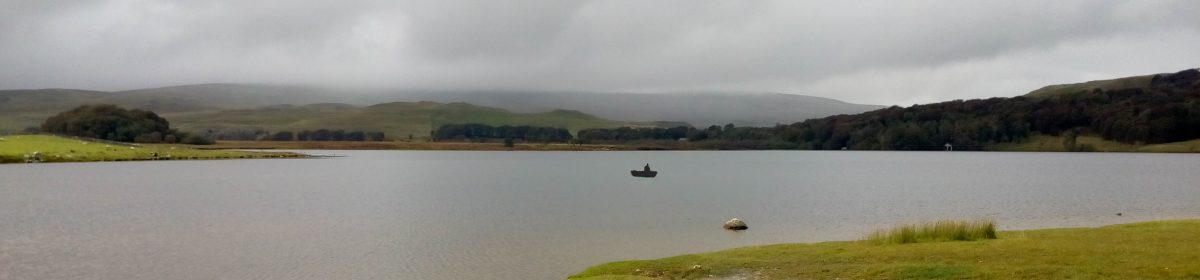
I’ve maintained my resolve not to buy any more fishing magazines but a kind friend passes on to me his copy of Trout and Salmon. In the February edition the editor, Andrew Flitcroft, comments on the decline of the Atlantic salmon to the point at which it has been declared ‘endangered’ in Britain, which means at risk of extinction, although the IUCN (International Union for Conservation of Nature) has yet to update its website. I think it possible that salmon in the catchments in central southern England are already functionally extinct, which means there are too few remaining for stocks to recover and maintain their genetic diversity.

What is being done about this impending catastrophe, along with all the others like rising river pollution and rapidly changing climate? Well, there’s been an uptick in bluster and bullshit. I’m not referring to the assorted cranks and morons on the likes of Twitter projecting their disinformation, conspiracy theories and spittle. I mean the people who are supposed to be taking serious action — governments, science institutions, charities like Wildfish and the Atlantic Salmon Trust. Words like ‘mandate’, ‘resources’, ‘regulators’, ‘urgent’ are fired from a lot of indignant blunderbusses to little effect.
The Scottish government has a Wild Salmon Strategy. Can we all sigh with relief, knowing the salmon’s future is safe in its hands? I’m afraid not. A document that begins by referring to ‘vision, objectives and priority themes’ is clearly going to be riddled with bullshit, the art of saying a lot of nothing as an alternative to doing anything. This is most obvious in this sentence from the ministerial foreword: This will require the Scottish Government, Agencies, the charity and private sectors to work together and coordinate action to prioritise the protection and recovery of Scotland’s wild Atlantic salmon populations. Pompous waffle never achieved anything but time-wasting. Once the document gets down to the nitty-gritty, we get the observation, Mortality at sea appears to be a major factor in the widespread decline of salmon across its North Atlantic range. Whoever wrote the strategy is pussyfooting. Marine mortality is the overwhelming factor.
According to a review of causes of salmon decline, which I’ve previously referenced, parr production and smolt migration is holding up well. But once at sea, the fish die. The mystery concerns the nature of the mortality. What is doing for the salmon? The Dadswell review argues against climate change being the cause on the grounds that natural variations in the past did not impact salmon populations overall. It also points out that predation is unlikely to be any higher now than before salmon began to decline rapidly around the mid-1980s. Seals are a particular bete noire for anglers at present, as the pages of Trout and Salmon show much too often. Aquaculture clearly has some effect on smolts leaving estuaries, especially when numerous cages lie along migration paths. Yet salmon stocks are also failing in catchments where there are no farms in the vicinity.
In the end we are left with the two most plausible reasons for salmon mortality at sea, lack of food or human predation. There is not much data on the abundance of Atlantic salmon prey; Dadswell, however, points out that salmon can switch between prey species and starvation is a less likely cause of collapse than IUU fishing (illegal, unreported and unregulated). When legal commercial salmon fisheries began to be closed down from the 1980s on, a rise in stocks was expected. Instead the declines continued in many catchments; even in those that showed a recovery, the downward trend soon returned. This is consistent with the hypothesis of sustained IUU fishing. Outside a limited area there is little or no surveillance or enforcement in the Atlantic Ocean. In contrast, Pacific fisheries are closely controlled and monitored. Stocks of Pacific salmon are healthy.
Despite the persuasive logic, this conclusion is not being taken seriously. The Scottish Strategy only mentions illegal exploitation briefly with no reference to open ocean fishing. In fact it passes over this part of the salmon’s habitat altogether: Relative to the wider marine environment our understanding of pressures and ability to take action is greater in freshwater and coastal environments. Taking action over potential illegal fishing out at sea is difficult, certainly, but focusing on freshwater and coastal environment will achieve nothing if IUU fishing really is the problem. Even the North Atlantic Salmon Conservation Organisation (NASCO) confidently asserts that commercial fishing has been regulated away, with no mention of possible IUU. Many other marine species are threatened by legal and illegal fishing; it would be remarkable if the salmon were not. But try finding the regulatory measures on the NASCO website will lead you to broken links.

So expect little useful action from the Scottish government. Neither should we expect much of the Atlantic Salmon Trust, fretting over smolt numbers in a couple of estuaries, far from the real problem; nor of Wildfish which similarly worries about salmon farming and river barriers (which have existed for long before the collapses of the last forty years); nor of the Missing Salmon Alliance, which strikes me as a vehicle for bullshit and little else.
The future of the Atlantic Salmon therefore looks bleak. They’ve already disappeared from rivers in Southern Europe. Even the northernmost populations that run Norway’s and Russia’s rivers are showing early signs of decline. Until it can be shown that IUU fishing is not the cause of the collapse, this should be the main focus. This can only happen at government level and charities like Wildfish should be lobbying hard.
At the end of his editorial, Flitcroft writes, Without anglers, the decline of wild salmon would be more severe. This is the sort of piffle that anglers love to come out with. He claims that anglers noticed the declines first, but fish populations, along with other wildlife, have been surveyed for many years. Anglers make more noise than most, true, usually taking aim at sources that may have little bearing. All the sounding off has done nothing to arrest the waning returns to rivers. The same issue of T&S has a feature of a salmon fishing trip to Iceland. In the past I’ve read about trips to Norway and, for those with the dosh, to Russia in pursuit of salmon fishing. Presumably little regard is paid to the pollution that goes with foreign travel. Anglers and editors like Andrew Flitcroft like to claim that we are the guardians of nature, yet consumers of nature strikes me as better description, especially those who travel far. The incessant clamour for restocking, ironic considering all the fuss about fish farm escapees tainting the gene pool, is guarding their own ‘sport’, not nature.
We can only make a small difference individually but that’s still worth doing. Pester your MP to raise illegal fishing with the government, get rid of the 4×4 CO2-belcher, cancel that flight to Argentina. And stop complaining about seals, cormorants and all the rest. They probably have little to do with the decline in our fishing, and have nothing to do with the heating of the climate. We are now in the midst of the sixth mass extinction with salmon right in there. We’re all responsible for that.

 The Secret Angler